Your link is nofollow. Now what?
Translated from the Spanish original. Leer en español

This week I uploaded the podcast to Spotify. Each episode has the address of the original blog article in its description. The first thing people asked me was the obvious one: great, so that link from Spotify counts for Google, right?
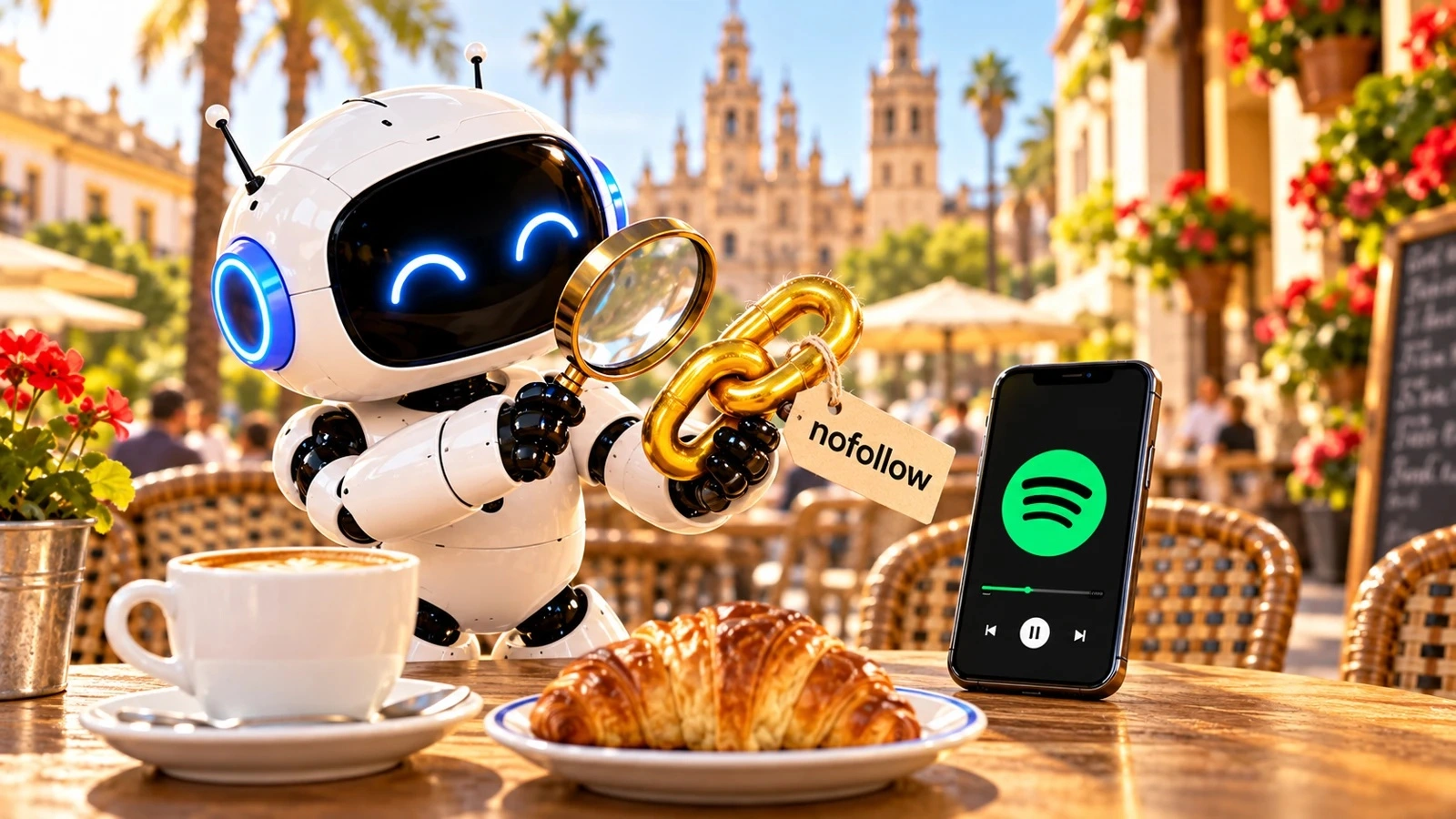
Short answer: don't count on it to rank. I looked at the code of the show's public pages and the result is a full lesson on how big platforms treat links. On the episode page, the URL is a clickable link with the tag rel="noopener nofollow". On the show page, the same URL travels as plain text, with no HTML link to check. A nofollow link is worth more than its name suggests, though not for the reason most people think.
What is nofollow and what changed in 2019?
The nofollow attribute was born in 2005 to fight spam in blog comments. The idea was simple: if a link carries nofollow, Google doesn't take it into account to rank the linked page. For years it was also the recommended way to mark advertising links.
In September 2019 Google announced two changes on its official blog, and that is still the reference today. It is not news, and that is exactly the point: seven years later it is still the rule of the game.
- First, two new tags appeared: rel="sponsored" for paid links or links under a commercial agreement, and rel="ugc" for user-generated content, such as comments and forums. Second, and more important, the three tags went from being an order to being a hint. In Google's words, it uses them "as hints about which links to consider or exclude" in its systems. Since March 2020 that also applies to crawling and indexing.
Mind the nuance: a hint does not mean it counts like a normal link. In the same announcement Google clarifies that, in most cases, it will keep treating those links as before, that is, without using them for ranking. What Google gains from the change is information: the words of the link describe the destination page and the set of links helps detect artificial patterns.
Practical translation: Google reserves the right to use those links, and you can't build a strategy on a reservation. If your plan depends on a hint turning into a vote, you don't have a plan, you have a hope.
Source: Google's official announcement on the evolution of nofollow, September 10, 2019, Google's official announcement (accessed on October 29, 2026).
How does Spotify link to the article?
The description of each podcast episode includes the phrase "Read the full article" followed by the URL. I looked at the code of two different surfaces, because they don't behave the same way.
On the episode's public page, when you expand the full description, the URL is a real link: an <a> tag with an href to castillocanton.com and the attribute rel="noopener nofollow". Of the pair, the part that matters for SEO is nofollow. Noopener is a common security measure for links that open in a new tab; it says nothing about rankings.
On the show page, where Spotify summarizes the recent episodes, the same URL appears as text inside a paragraph. There is no HTML link to check there: the address travels as text that the listener can copy.
About Spotify's reasons I can only speak about what I observed: on its public site, today, the episode link comes out marked as nofollow and the URL on the show page is not a link. What Google does document is what those tags are for when a platform uses them: nofollow means "I link without endorsing" and ugc means "a user wrote this". The check is reproducible: open the description of any episode, inspect the link with your browser and look at the rel attribute.
Checked directly in the code of both pages on October 29, 2026: the episode's public page, Episode checked (link with rel="noopener nofollow" when you expand the description), and the show page, Show page (URL as plain text).
Link, mention and authority: what is your business really after?
A link is a clickable href. It can be normal, nofollow, sponsored or ugc, and each variant tells Google something different about the intent of whoever links. The scenario everyone wants is the normal editorial link: the one that exists because someone cites your work of their own free will.
A mention is your name, your brand or your website written without a link. There is no link to evaluate, but it does something else: people who listen to you or read you and then search for you by name. That brand search is real demand, and it arrives even if nobody links to you.
Authority is the result, not a lever. It is being the reference others point to when they talk about a topic. It is not bought with an attribute or declared with markup: it builds up by publishing things worth citing, linking or remembering. Links and mentions are symptoms of authority, not a substitute for it.
The expensive mistake is chasing the symptom: collecting nofollow links from directories, comments and profiles hoping some of them will "slip in" authority. The 2019 announcement itself explains that Google uses the set of links as a hint to detect artificial patterns.
What do we know and what don't we know about AI?
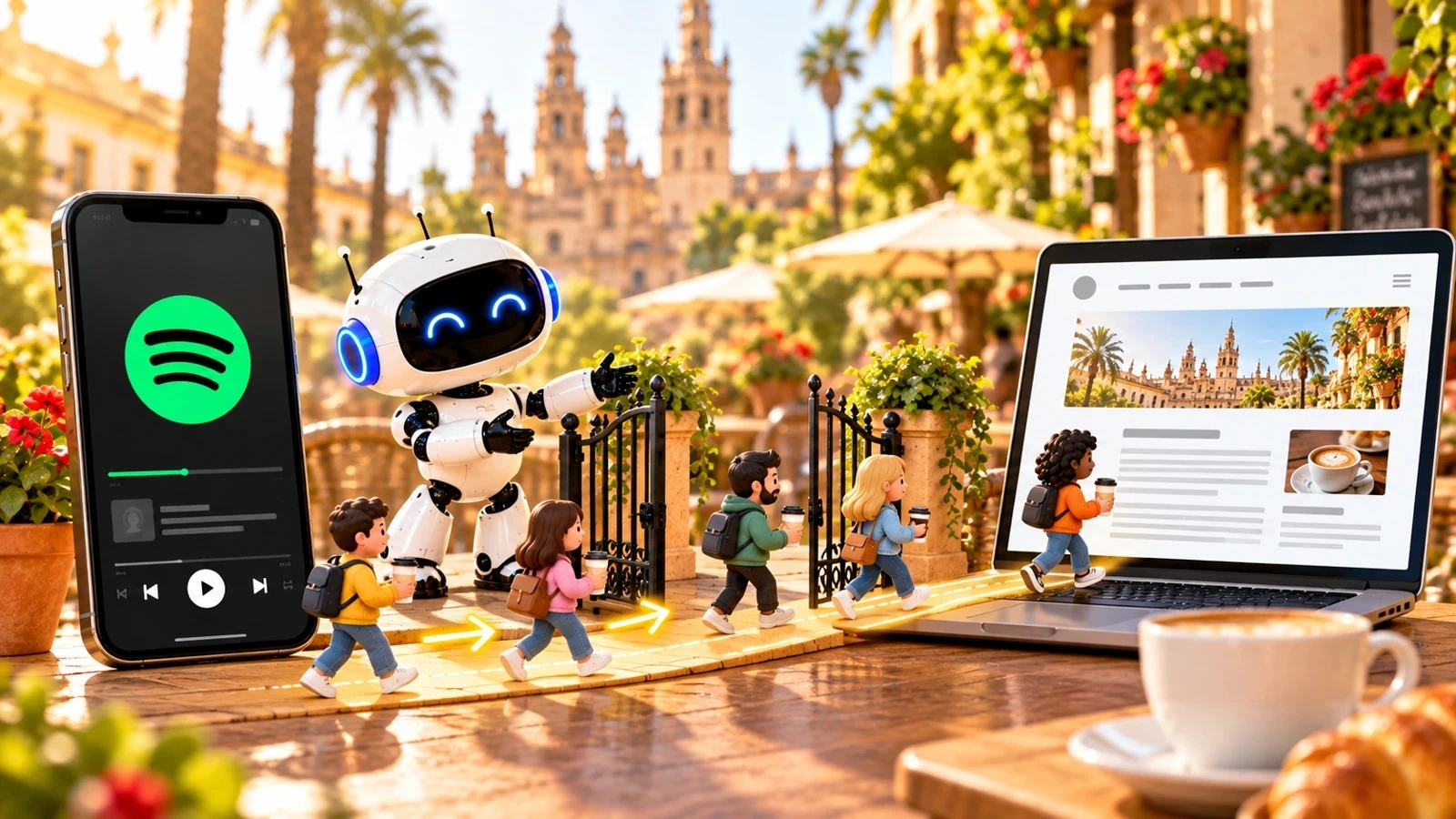
Something similar happens with Google's generative summaries. What we know, because the official documentation says so: Search's AI features rely on the normal Search systems, show links so people can go deeper and don't ask for any special markup or format to appear in them. If your page is useful, clear and crawlable, you are already in the game.
What we don't know: whether a mention without a link or a nofollow link carries any weight in which sources those summaries choose. Google publishes nothing like a points table, and anyone who sells you a formula to "optimize authority in AI" is selling you smoke with data that doesn't exist in public. The prudent thing is to work on what can be shown: content that answers better than the one next to it and a brand people search for by name.
Source: Google's documentation on AI features and your website, AI features documentation (accessed on October 29, 2026).
A citation is not the same as a recommendation either: they are different outcomes.
What do I do with my links from today?
- First, don't reject a link because it is nofollow. A link from a site your audience reads brings visits even if Google decides not to use it, and visits are the goal.
- Second, mark your own outgoing links properly: sponsored for paid ones, ugc for comments and forums, nofollow when you link without wanting to endorse. There is no need to touch old nofollows; Google says so explicitly in the 2019 announcement.
- Third, don't use nofollow to keep a page from being indexed. Since 2020 it is only a hint for crawling too. Beware of the typical remedy: robots.txt controls crawling, not indexing, and a blocked URL can still appear in the results. To keep a page from being indexed, the tool is the noindex tag, and Google can only see it if the URL is crawlable.
- Fourth, when you upload content to platforms like Spotify or YouTube, check how your URL is rendered on each surface, as we did today, and measure what can be measured: how many people really arrive from those descriptions. That is in your analytics, not in theories about authority.
Sources: Google's robots.txt specification, robots.txt specification, and the guide to block indexing with noindex, noindex guide (accessed on October 29, 2026).
Frequently asked questions
Should I ask Spotify to remove the nofollow?
There is nothing to ask for: it is the treatment the platform gives to links in descriptions, and a nofollow link from a page your audience listens to still brings visits. Put that effort into making the description invite a click.
Is the plain-text URL on the show page any use?
It lets a person copy it and visit your website. That it is not an HTML link only means there is no link to evaluate; the visit it generates is just as real.
Can I use nofollow to keep a page from being indexed?
No. Since March 2020, nofollow is only a hint for crawling and indexing too. To prevent indexing, use noindex on the page and make sure robots.txt doesn't block it, because Google needs to crawl it to read the tag.
Do nofollow links help SEO?
Google has treated them as hints since 2019 and clarifies that, in most cases, it still doesn't use them for ranking. You can't count on them to rank, but they aren't useless either: they bring visits, spread your brand and are part of a natural link profile.
To finish your coffee: Spotify's nofollow link is not the shortcut many people look for, and that's fine. Its job is for whoever listens to you to be able to find you. Authority comes the other way, the usual one: publishing things worth searching you for.
Last review of sources: October 29, 2026.