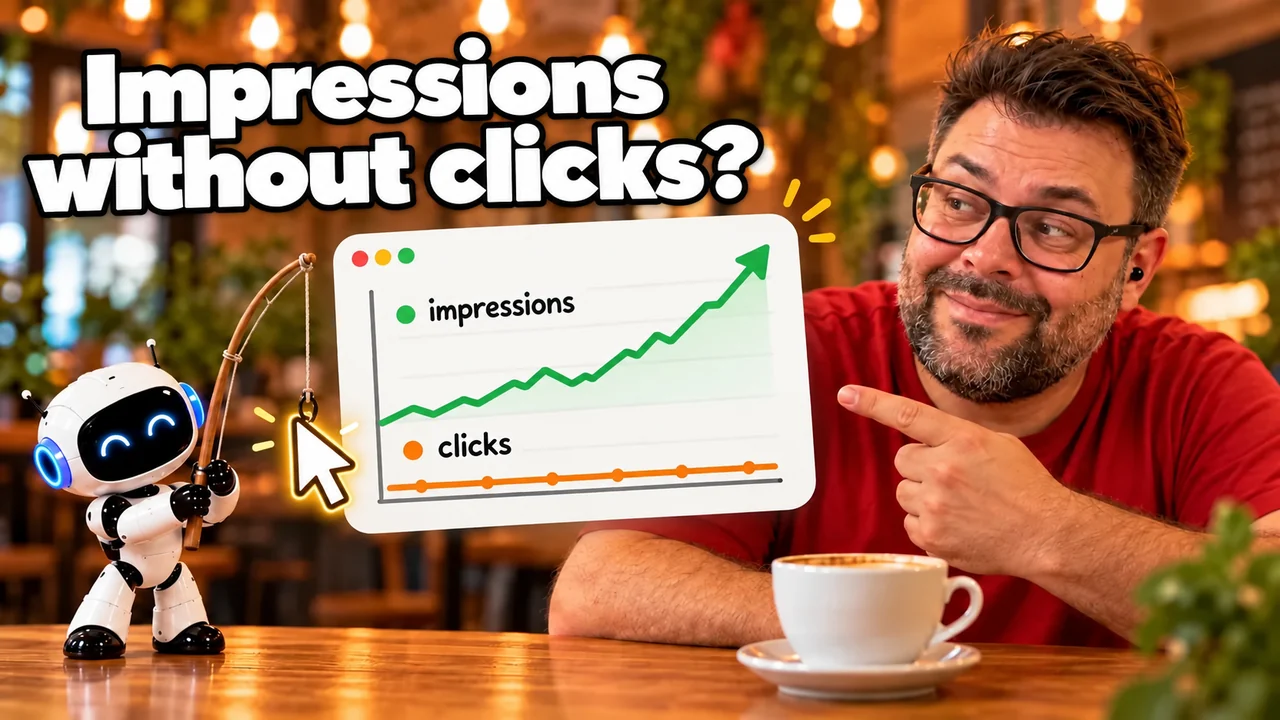
AI Mode agents: prepare your website for continuous search
Translated from the Spanish original. Leer en español

AI Mode's information agents keep searching for the user after the first query. What changes for your website and what is worth reviewing.
In brief
- In May Google introduced AI Mode's information agents: after the first query, the agent keeps watching in the background and alerts the user when something that fits appears.
- Searching stops being an instant and becomes a process lasting several days; your information must hold up for all that time.
- When inventory changes, being fresh means keeping price, availability, stock, date, location and conditions up to date, not just publishing recent content.
- Part of that activity may fall outside today's metrics, although nobody yet knows to what extent.
Google's announcement, in plain words
It will happen to you: you want to rent a car in August, you check prices today, again tomorrow and again the following week in case they have dropped. A bit like peeking into the fridge every ten minutes. Google wants you to stop doing that.
In May Google unveiled the information agents inside AI Mode, the version of its search engine with artificial intelligence. Instead of relaunching the query every week, you ask to be notified. Google says it is activated by adding "keep me updated" to what you search. A case: "Let me know when a car rental in Málaga from August 10 to 17, with automatic transmission and free cancellation, drops below 150 euros."
From that moment the agent reviews information without you seeing it and, if it finds something that fits, sends you a summary. Its sources include blogs, media and social media posts, plus Google's own data on shopping, finance or sports. It is the classic alert with a brain and no vacations. The rollout, as Google announced, was going to arrive during the summer and start with those who pay for Google AI Pro and Ultra. For the user it is a convenience; for those of us who do SEO, a challenge.

Search goes from a one-off date to a relationship
Our SEO has always revolved around an instant: someone types, Google returns results and you fight to rank well and win the click. It is a date, and on a date it is enough to look good for a while.
With an agent in between the sequence is different. A need exists, Google watches it for days, new sources appear, an alert reaches the user and only then does the user decide. That is already a relationship, and relationships demand consistency.
Think of asking in a shop whether a certain product has come in versus leaving them your number so they call you. In the first case the shop only needs to be friendly when you show up; in the second it must have the right information every time someone inquires on your behalf. A new question then arises: what must a URL meet to keep being considered useful for as long as the search lasts? There is no complete answer yet, but it is already worth asking the question.
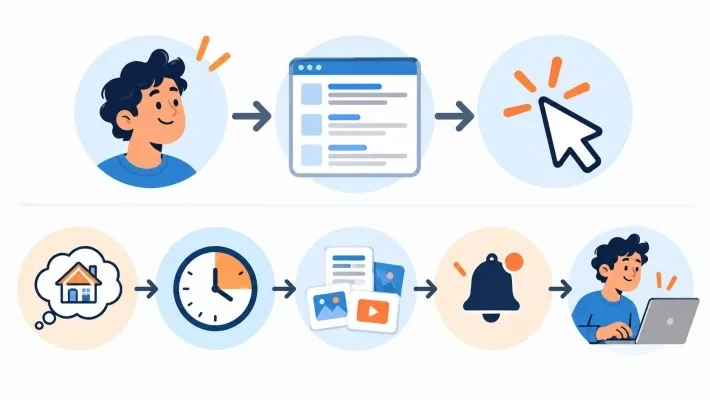
| Classic search | Search with an agent | |
|---|---|---|
| Duration | An instant | Several days |
| What the user does | Searches again to see if something changed | Sets up the need and waits for the alert |
| What it demands of you | Being liked when it arrives | Up-to-date data every time Google checks |
If you cannot see all the columns, scroll the table sideways.
An expired price is the pizzeria sign
Think of a person who wants "rental car in Mallorca from August 12 to 18 for under €300". Today they would return to Google several times in the following weeks to watch the price. With an agent, they set it up once and Google takes care of it: an offer appears, availability varies, a provider joins, a price drops. The alert arrives with the news and they haven't pressed a single key.
Now sit in the chair of whoever runs a car rental website. Your page advertises "from €18 a day", but for those dates that price has sold out. It is the pizzeria with the sign for a €5 pizza that, when you order, tells you today only the €12 ones are left. A person spots the trick instantly. We don't know how an agent will handle it, although it is reasonable to assume that data nobody keeps up to date will have fewer chances of being chosen.

The freshness that matters when there is inventory
In SEO freshness usually evokes news or recently touched-up articles. If your business has changing inventory, it means price, availability, stock, date, location and conditions. It happens in travel, hotels, car rental, real estate, jobs, ecommerce, tickets and flights. Examples: a sold-out event whose button insists on "buy now", an already filled position that is still advertised, a rented apartment that is listed as available. Impeccable text can be expired, just like a yogurt forgotten in the fridge. Writing well isn't enough: what you say has to remain true.
The gap our metrics could have
We measure SEO with impressions (the times we show up), clicks, positions and CTR (the percentage of people who click after seeing us), and almost everything is consulted in Search Console, Google's free tool. They all start from one assumption: someone searched. However, an agent can look at data, cross-check sources and decide there is still nothing worth alerting about. The user doesn't search again or click, but Google has indeed gone over information tied to their need. Like a customer who passes by your shop, takes a look and leaves without you noticing.
Let nobody read here that Search Console will launch an "agent appearances" metric tomorrow. What is raised is that there may be discovery and selection activity poorly reflected by current data. How much, we don't know, and it is honest to admit it. On other changes that already affect what we measure, there is more in Google, SEO and AI: what changes.
No drama: the foundations are the same
You don't need to rename your LinkedIn profile "SEO Specialist for agents". Google still needs to locate information, understand it, judge its relevance and decide whether to show it. The novelty is the time dimension: before we optimized to answer a query well; now it also counts that the information keeps being useful while the query is still alive.
How to apply it: four reviews for websites with changing data
There is no official "SEO for agents" list. What follows are old problems that weigh more now; in a project of this kind, I would start here.
- The delay between a change and its reflection on Google. If in the morning you raise a price or sell out a product, measure how long Google takes to show it from your page. If it is days, persistent search would be fed with old data.
- Each piece of data on its URL. With one page for Mallorca and another for Palma, each must show only its own figures, with no mixing or duplicates; otherwise Google doubts which to trust. Sometimes the symptom is that Google ranks the wrong URL.
- The proportion of the page that doesn't change. If there are 600 fixed words and one price lost among them, for Google the page barely varies even though the price has moved, and it finds it harder to perceive the novelty.
- The border between current and expired. An offer that expired on July 15 and is still visible in September mixes the current with the past, and puzzles anyone, machines included.
| Review | Question for your website |
|---|---|
| Update delay | How long does Google take to reflect a price or stock change? |
| Right URL | Does each page show its own data (Mallorca versus Palma)? |
| Weight of the changing data | Is the price lost among 600 fixed words? |
| Current versus expired | Are past offers still visible? |
If you cannot see all the columns, scroll the table sideways.
Key ideas
Active tracking that alerts the user can be born from a search in AI Mode. Searching becomes a process of days. With variable inventory, being fresh is keeping price, availability and stock up to date. Part of the activity could escape current metrics. The base of SEO doesn't move, but staying useful over time gains weight. On how brand visibility is transformed in AI answers, see Google talks about your brand, but the answer no longer depends only on you.
Frequently asked questions
What are AI Mode's information agents?
Agents that, after a search in AI Mode, keep reviewing information in the background and send the user a summary when something fits. Google says it is enough to add "keep me updated" to the search.
Does this change the basics of SEO?
No. Google has to find, understand, assess relevance and decide whether to show. The time factor varies: the information must keep being useful while the search continues.
Will I see it in Search Console?
It is unknown. An agent can consult and compare sources without a search or click from the user, so there may be activity that current metrics don't reflect well.
To finish your coffee
We have understood SEO as a fight to appear at the moment someone searches. Google proposes something different: the user searches once, goes about their business and the search keeps working. Perhaps the question becomes, besides "do we show up when someone searches?", "do we remain a useful source when Google searches again for that person?". I leave you the homework: which piece of data on your website changes fastest and how long would Google take to notice?
If you want to check how fresh the information reaching Google from your website is, tell me your case.
Sources and further reading
Google. A new era for AI Search, May 19, 2026. - https://blog.google/products-and-platforms/products/search/search-io-2026/
Google. 100 things we announced at Google I/O 2026. - https://blog.google/innovation-and-ai/technology/ai/google-io-2026-all-our-announcements/
Google. Watch 12 Google I/O 2026 keynote videos of the top announcements and updates. - https://blog.google/innovation-and-ai/technology/ai/io-2026-keynote-moment-videos/
9to5Google. Google AI Mode starts rolling out Search agents that keep track of information for you, June 12, 2026. - https://9to5google.com/2026/06/12/google-information-agents/
The Next Web. Google launches always-on information agents in Search at I/O 2026. - https://thenextweb.com/news/google-wants-search-to-work-while-you-sleep-and-its-new-information-agents-are-the-plan