Google Search Profiles: what they are and how to prepare
Translated from the Spanish original. Leer en español

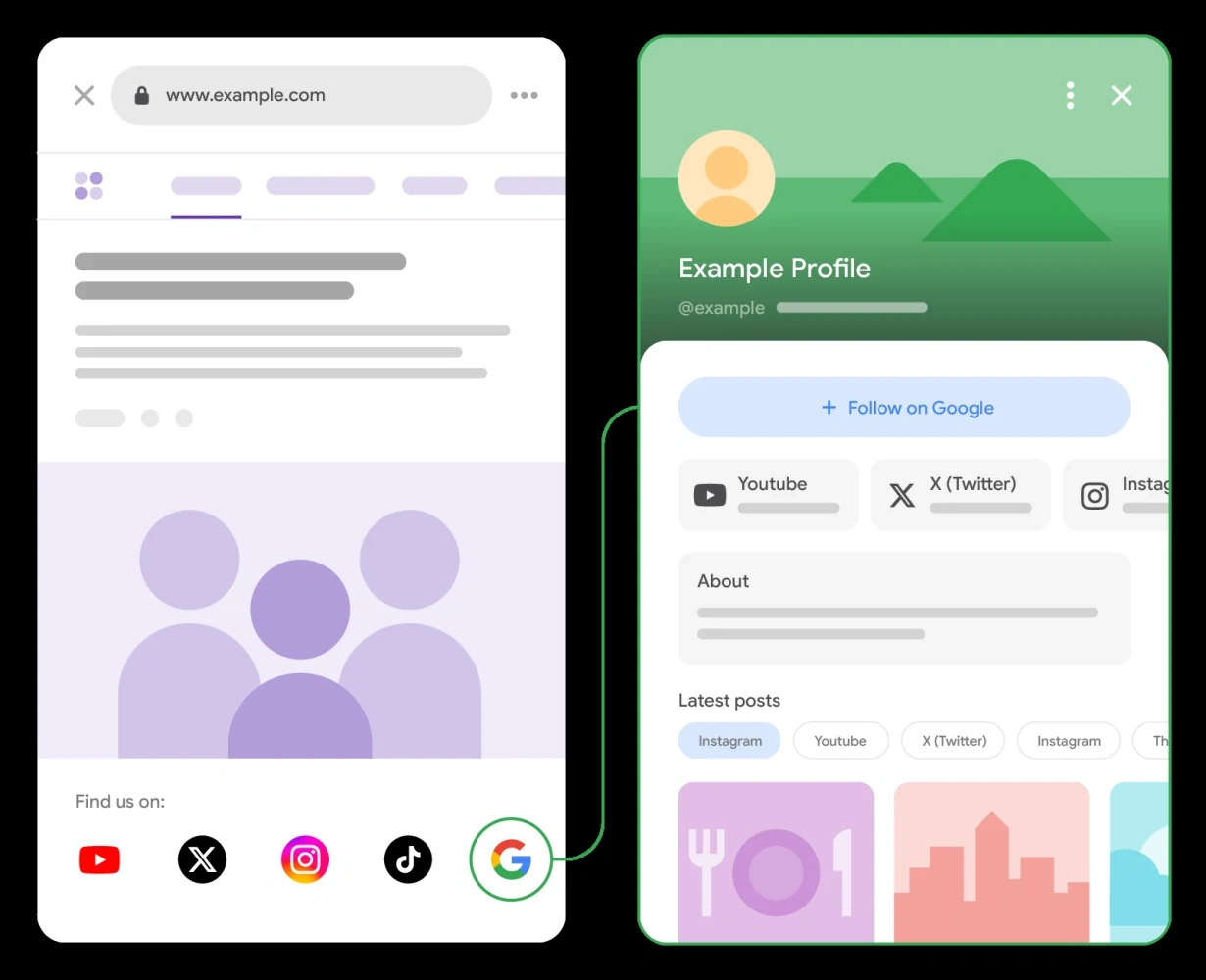
Search Profiles brings together on Google the accounts of whoever publishes and lets you follow them. What changed this week and what is worth preparing without expecting miracles.
In brief
- Search Profiles is a profile inside Google that groups the accounts and content of a person, creator or media outlet, with a button to follow them.
- According to Google Search Central, following a profile makes it more likely that the linked content appears in the follower's Discover; it doesn't mean receiving everything that is published.
- Today profiles can only be created in the United States and a minimum of 10,000 followers on one of the supported platforms is required.
- There is no automatic ranking boost: what is useful for now is understanding the feature and taking care of consistency across channels.
The problem it tries to solve
Think about how you come across a journalist: through a video that convinces you. You want more, but her reports live on a website, her videos on YouTube and her comments on Instagram, and having found one account doesn't take you to the others.
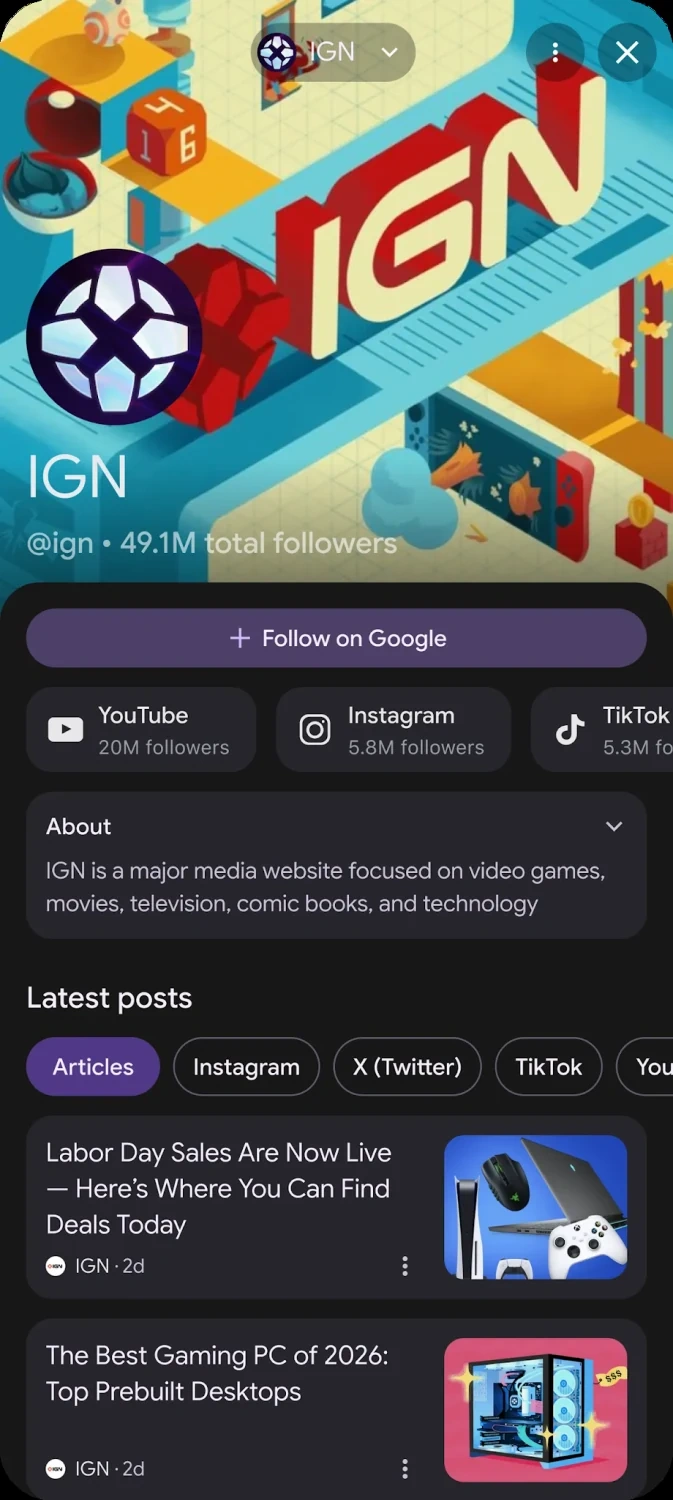
Search Profiles tries to be that meeting point. Each profile brings together the linked accounts and the content of a person, a creator or a media outlet, and adds a button to follow them from Google. Google Search Central explains it like this: following a profile increases the likelihood that their linked content shows up in that follower's Discover.
The benefit for the reader is that they can show interest in someone without first deciding on which channel.
From interest in one format to continuity in another
A made-up case to illustrate it: an expert on train travel whom someone reaches while searching for how to get from Madrid to Paris. Days later, that person may prefer a video of hers about luggage or an article about night trains. The format varies; what hooks is the author's judgment.
Hence each piece can open the door to the rest of someone's work. Careful: following someone raises the chances of finding them again in Discover, but doesn't guarantee receiving everything they publish.
My opinion: this puts the focus on a concrete editorial question. Once you have resolved the reader's doubt, what reason do you give them to look for you again? A good answer stays a single visit; a recognizable judgment can create the wish to read the next piece.
What Google announced this week
Profiles were born in June. These days Google has published updates and a guide:
- An expansion of access.
- The ability to manage several brands from a single account.
- Articles with better thumbnails and longer headlines.
- A guide to linking from your website to the profile.
The link fits next to an article's byline, in the bio or in a newsletter, that is, at the moment the reader has already decided they are interested in who writes.
Availability: what limits its use today
Today profiles can only be created in the United States, with a minimum of 10,000 followers on one of the supported platforms and meeting Google's other requirements. If your project is in Spain, for now it's about understanding how it works and rehearsing continuity between channels. These requirements and the availability may vary.
How to apply it
Even if you can't open your profile yet, there is homework that is worth it either way:
- List all your profiles (web, video, social networks) and verify that name, links and authorship tell the same story.
- Review your bio and author byline: whoever comes from a video must recognize you when opening an article.
- Define what your audience would want to follow: the whole outlet, a specific journalist or a specialist who explains a topic well.
- Assign a role to each format and keep a recognizable perspective across all of them.
- When it is available to you, link to the profile next to the byline, in the bio or in the newsletter.
| Who you are | What is worth preparing |
|---|---|
| Individual author | A clear name, a useful introduction and correct links between your accounts. |
| Media outlet or company | Decide which presences the public wants to follow and check that each profile brings together the accounts that belong to it. |
| Team with several formats | Written guide for the detail, video for the demonstration and social post for the brief observation. |
If you cannot see all the columns, scroll the table sideways.
For the general picture of how search changes with AI, you have Google, SEO and AI: what changes. And to see how a brand's identity depends on third-party sources, what Google says about your brand.
Frequently asked questions
What is a Search Profile?
It is a profile on Google that brings together the content and linked accounts of a person, a creator or a media outlet, with a button to follow them.
Does following a profile make me receive everything it publishes?
No. According to Google Search Central, it makes it more likely that the linked content appears in the follower's Discover, but it doesn't mean receiving everything they publish.
Can I create one from Spain?
For now creation is available in the United States and requires at least 10,000 followers on one of the supported platforms, in addition to other Google requirements. These requirements may change.
To finish your coffee
What attracts me most about this feature is that good content can start a relationship: the reader finds something useful, identifies its author and wants to know more about them. Google provides the place to record that interest.
One question remains for whoever publishes: if tomorrow they read you somewhere else, why would they want to keep reading you?
If you want to review the consistency of your online presence before these features reach your market, tell me your case.